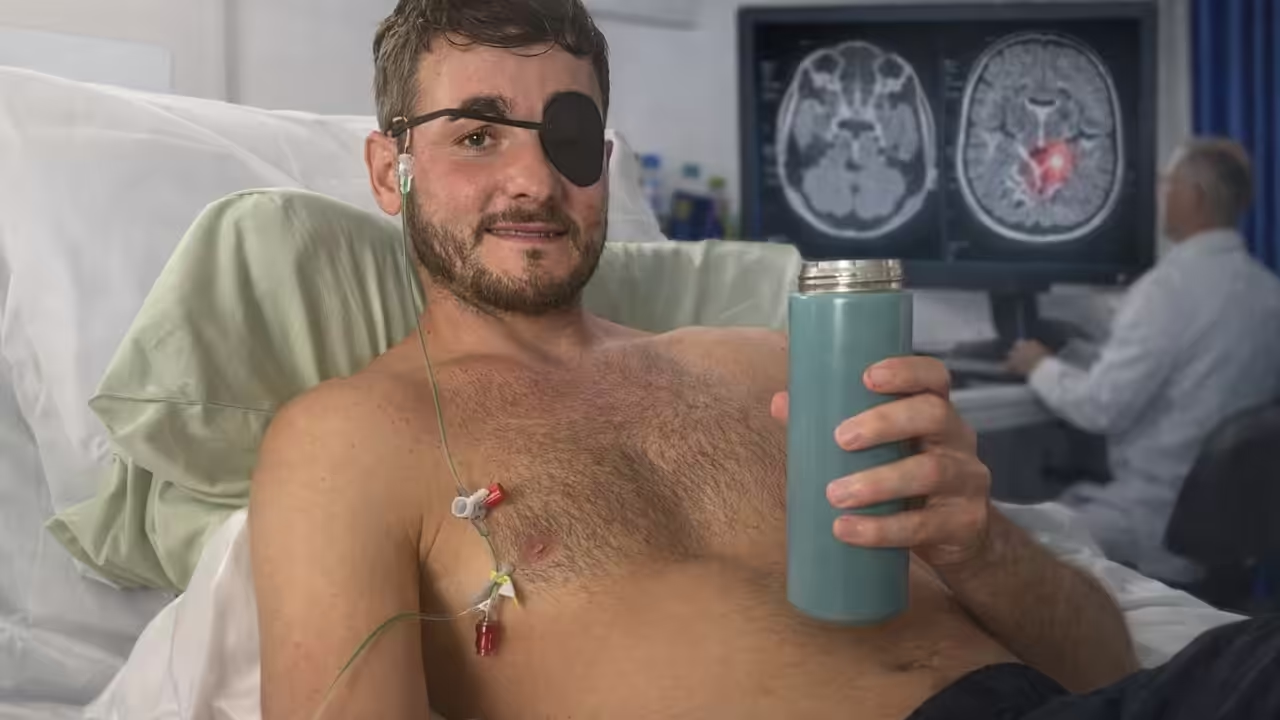
For years, Luke Taylor lived with pain that kept returning and kept getting worse. What began as severe headaches in his teens was repeatedly treated as migraines, even though the episodes were often accompanied by nausea, vomiting, and long periods of physical distress. He visited doctors more than once, but the message remained largely the same: he was young, otherwise healthy, and likely dealing with migraines rather than something more serious.
That long period of uncertainty finally changed in July 2025, when Taylor pushed for further testing and asked for an MRI. The scan revealed a haemangioblastoma, a rare benign brain tumor that is typically found in the cerebellum, the part of the brain involved in movement and coordination. By the time the condition was identified, the tumor had reportedly grown larger than a golf ball. Doctors told him that without emergency surgery, he could have only days to live.

His story has drawn attention not only because of the shock of the diagnosis, but because it reflects what delayed medical answers can look like in real life. A decade of symptoms was followed by urgent brain surgery, a second emergency operation, a long recovery, and a new life shaped by ongoing scans and rehabilitation. It is also a story about persistence, family support, and the emotional weight of finally learning the reason behind years of unexplained suffering.
Table of Contents
A Decade of Pain Before Answers
Luke Taylor, a civil engineer from Warrington, England, said he had suffered with severe headaches for around 10 years before doctors identified the actual cause. These were not mild or occasional episodes. According to the account shared in the report, the headaches could be so intense that they led to vomiting and left him unwell for days at a time. Despite that pattern, his symptoms were repeatedly dismissed as migraines.
For many patients, long-term symptoms become part of daily life in ways that are difficult for others to fully understand. When pain is repeatedly explained away, it can slowly create frustration, self-doubt, and exhaustion. In Taylor’s case, the repeated reassurance that he was a healthy young man appears to have delayed more detailed investigation, even as the symptoms continued.
What makes the case especially striking is that the warning signs did not disappear with time. Instead, the headaches reportedly became worse. The worsening pain eventually pushed him to insist that doctors take the problem more seriously and order imaging that could look beyond a migraine diagnosis. That moment became the turning point in a story that had already stretched across much of his young adult life.
The MRI That Changed Everything
In July 2025, after years of escalating symptoms, Taylor demanded an MRI scan. The results changed everything almost immediately. Doctors found a haemangioblastoma, described in the report as a rare benign brain tumor usually located in the cerebellum. Although benign tumors are non-cancerous, they can still become extremely dangerous depending on their size and location, especially inside the skull where space is limited.
The diagnosis came with frightening urgency. Because the tumor had grown so large, Taylor was told he needed emergency surgery. He later said that doctors warned him he could have only days to live if the operation did not happen quickly. For someone who had spent years searching for answers, the emotional impact of hearing that kind of news was overwhelming.
He was just 26 at the time of diagnosis. In the report, he described the shock of suddenly facing the possibility that his life could be cut short, even as he was thinking about his future and his family. The article notes that he has a daughter, making the diagnosis even harder to process. The transition from being told he had migraines to being told he needed life-saving brain surgery happened with devastating speed.
Emergency Surgery and Sudden Fear
Within a week of the diagnosis, Taylor underwent a nine-hour operation to remove the tumor. That surgery was already a major medical event, but the ordeal did not end there. According to his partner, Nia Jones, he developed complications after the operation. She said he was slurring his words, could not open his eyes, and later had to undergo another emergency procedure after doctors found a bleed on the brain.
This part of the story shows how a delayed diagnosis can have effects that continue even after treatment finally begins. By the time the tumor was discovered, the situation had become an emergency rather than a planned or early intervention. That meant not only a bigger operation, but also a more difficult and risky recovery path.
For loved ones, the experience can be just as traumatic. Jones’ account adds an important human layer to the story. She was not just watching someone recover from a major operation; she was also watching him face a second emergency almost immediately afterward. The stress of uncertainty, the fear of losing someone, and the need to stay strong during medical crises often remain invisible in public retellings, but they are central to what families endure.
Recovery Meant Starting Over
After the surgeries, Taylor spent 18 days in the hospital before being discharged. But leaving the hospital did not mean returning to normal life. The report says he had to relearn basic functions, including walking, talking, and hand coordination. Jones also said she had to help him with everyday tasks such as getting dressed and cutting his food.
That stage of recovery often receives less public attention than diagnosis or surgery, yet it can be the most demanding period emotionally and physically. Rehabilitation can be slow, repetitive, and exhausting. Progress may come in small steps rather than dramatic breakthroughs. For someone who had once been living an ordinary young adult life, the need to relearn basic actions would have been a major adjustment.
Jones described the months after surgery as some of the hardest they had experienced. Her words suggest a recovery defined not only by medical care, but by persistence and daily support. Brain surgery can save a life, but healing afterward may require a long period of rebuilding confidence, movement, speech, and routine. Taylor’s experience appears to reflect exactly that.
The Relief After Months of Uncertainty
There was, however, some deeply positive news later in the year. In November 2025, Taylor was told that the surgeries had successfully removed the entire tumor. He said he was overwhelmed and cried with relief when he learned that doctors had managed to get it all. After so many months of fear, pain, and rehabilitation, that moment appears to have brought a different kind of emotional release.
Even with that success, the journey is not completely over. The report says he will continue having scans every six months for the next 10 years to monitor for recurrence. That detail is important because it shows how a serious diagnosis can change life long after the immediate crisis has passed. The emergency may be over, but follow-up care becomes part of the future.
For many survivors, this stage involves a mix of gratitude and ongoing vigilance. Good results do not erase what happened, and regular scans can become emotional milestones that bring both reassurance and anxiety. Taylor’s case shows that survival is not just about getting through the operation. It is also about living with the memory of how close the situation became and learning to move forward carefully.
Why This Story Resonates
Stories like this often resonate because they sit at the intersection of medicine, trust, and self-advocacy. Taylor’s experience raises difficult questions about what happens when symptoms continue for years but are repeatedly labeled as something less serious. It also highlights the importance of listening closely when a patient says their condition is changing or worsening.
At the same time, the story is not simply about missed warning signs. It is also about what happened once the truth was known: the speed of the medical response, the seriousness of the operations, and the role of personal determination in both diagnosis and recovery. His insistence on getting an MRI was a decisive moment. Without it, the tumor may have remained hidden until the consequences became even more severe.
There is also a broader human message in how quickly ordinary life can be overturned. Taylor was in his twenties, had family responsibilities, and by all outward appearances was building his future. Then, in a matter of days, he went from persistent headaches to emergency neurosurgery. That contrast is one reason the story leaves such a strong impression.
Turning Survival Into Purpose
The report says Taylor and Jones are now preparing to take part in the Yorkshire Three Peaks Challenge to raise money for The Brain Tumour Charity, an organization that supported them during their ordeal. Their fundraising effort suggests that the experience has moved beyond private survival and into public support for others facing similar diagnoses.
That decision gives the story a meaningful final chapter. Rather than allowing the experience to remain only a memory of fear and medical crisis, the couple is connecting it to awareness and support. For families going through brain tumor diagnoses, practical help and emotional guidance can make a significant difference. Their effort reflects a desire to give something back after receiving help themselves.
It also shows the emotional arc of the story in full. What began as years of dismissal moved into emergency treatment, then into rehabilitation, and now into advocacy. That does not erase the pain of what happened, but it does show how some people try to turn their hardest experiences into something useful for others.
A Story of Persistence and Survival
Luke Taylor’s experience is a powerful reminder that prolonged symptoms can carry a story that is not always obvious at first glance. For 10 years, he lived with severe headaches that were repeatedly treated as migraines. When he finally obtained an MRI, doctors found a rare brain tumor that had already become life-threatening, leading to emergency surgery and a difficult recovery.
What makes the story especially compelling is not only the delayed diagnosis, but the life that followed it. He survived two operations, spent weeks in the hospital, relearned basic skills, and eventually received the news that the tumor had been fully removed. Now, with long-term monitoring ahead, he and his partner are using their experience to support others.
In the end, this is not just a medical story. It is a story about being unheard, refusing to stop asking questions, surviving a frightening diagnosis, and rebuilding life afterward. That is why the case has touched so many readers: it captures both the danger of delay and the strength it can take to keep pushing for answers.