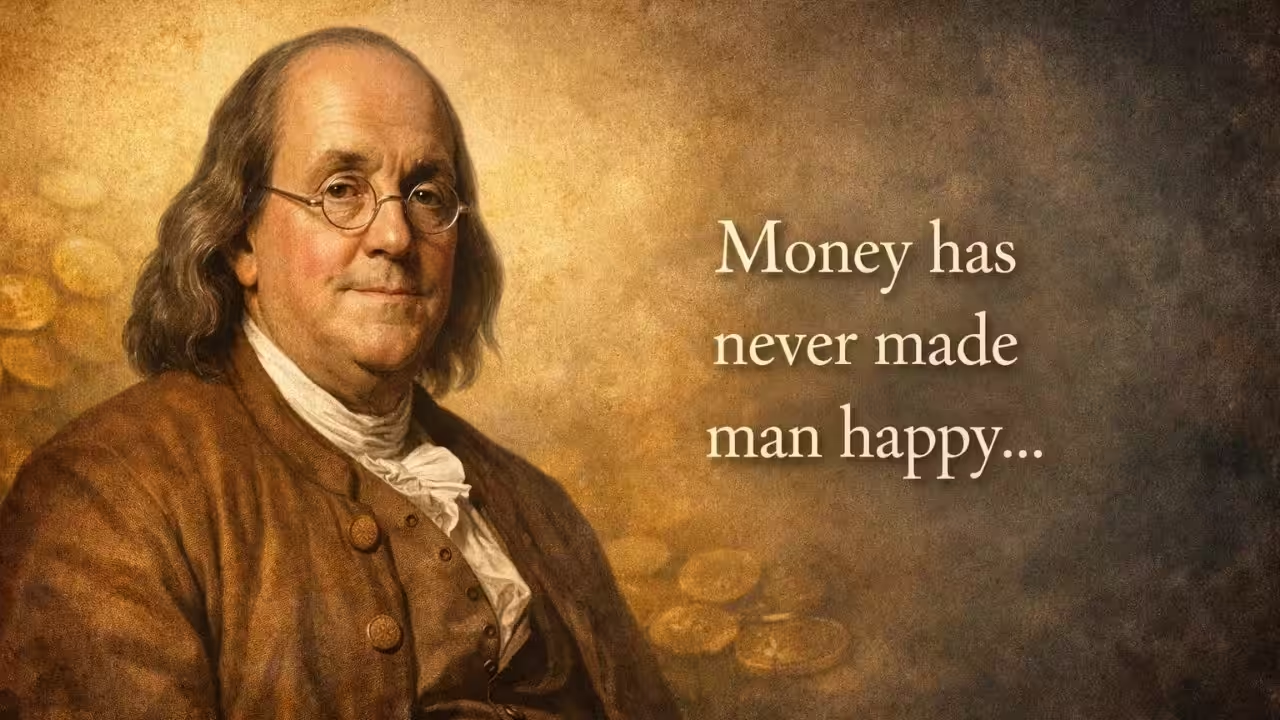
Money has always played a central role in human life. It helps people meet basic needs, improve living standards, and build security for the future. However, thinkers across history have questioned whether money alone can truly lead to happiness. Among them, Benjamin Franklin offered a powerful insight that continues to remain relevant even today.
His famous quote, “Money has never made man happy. The more one has, the more one wants,” highlights a deep truth about human nature. It suggests that wealth does not automatically bring satisfaction, and instead, it often increases desire rather than fulfilling it.

In a modern world driven by consumption, competition, and comparison, this idea has gained even more importance. From rising incomes to increasing lifestyle expectations, many people experience a constant cycle of wanting more. Franklin’s words provide a simple but meaningful reminder that happiness may not lie in accumulation.
Table of Contents
Understanding the Meaning of the Quote
The quote clearly explains that money, by itself, does not have the ability to create happiness. According to Franklin, money is only a tool, and it lacks emotional value. It can support life, but it cannot fulfill deeper human needs such as peace, satisfaction, or contentment.
Another important part of the quote is the idea of “more one has, the more one wants.” This reflects a natural human tendency. When people achieve financial success, their expectations often increase. Instead of feeling satisfied, they begin to aim for even higher levels of wealth, creating a never-ending cycle.

This concept also suggests that desire grows faster than satisfaction. Even if someone reaches a financial goal, new desires replace old ones, preventing a sense of completion.
The Life Perspective of Benjamin Franklin
Benjamin Franklin was not just a philosopher but also a practical thinker who experienced life from different angles. He was born into a modest family and worked hard to become one of the most influential figures in history.
Throughout his life, he emphasized values such as discipline, hard work, and simplicity. His writings often focused on self-improvement and moral living rather than material success. Even though he understood the importance of money, he never considered it the ultimate goal of life.

His personal journey gives weight to his quote. Having achieved success himself, Franklin understood that wealth alone could not guarantee happiness or inner peace.
Why Money Cannot Guarantee Happiness
Money is important for survival and comfort, but it has clear limitations when it comes to emotional well-being. It can provide food, shelter, and security, but it cannot create meaningful relationships, purpose, or personal fulfillment.
Studies and historical insights suggest that once basic needs are met, the impact of additional income on happiness becomes limited. This aligns with Franklin’s idea that money does not have the nature to produce happiness.
Another reason is comparison. As people earn more, they often compare themselves with others who have even more wealth. This comparison reduces satisfaction and increases pressure, making happiness harder to achieve.
The Cycle of Desire and Consumption
Franklin’s quote also highlights a psychological cycle. When a person earns more money, their lifestyle often changes. They begin to spend more, upgrade their habits, and raise their expectations.
This leads to a situation where increased income does not reduce stress but may actually increase it. People start working harder to maintain their new lifestyle, which again creates new desires.
This cycle is sometimes described as a “vacuum effect,” where money does not fill the gap but creates a larger one.
As a result, instead of feeling satisfied, individuals remain in a constant state of wanting more.
Relevance of the Quote in Modern Society
In today’s world, the pressure to earn more and achieve financial success is stronger than ever. Social media, advertising, and global competition have increased the desire for a better lifestyle.
People often associate success with wealth, luxury, and status. However, this mindset can lead to dissatisfaction, even among those who are financially stable. Franklin’s quote directly challenges this idea by reminding people that happiness is not linked to how much money one has.
The modern economy also shows that higher income levels do not always result in better mental health or life satisfaction. This makes Franklin’s message even more relevant in the present time.
Balancing Wealth and Well-Being
While Franklin did not reject money, he emphasized balance. Money should be used as a tool to support life, not as the main purpose of life.
A balanced approach involves focusing on both financial stability and personal well-being. This includes building relationships, maintaining health, and finding purpose in daily activities.
Franklin also believed that reducing unnecessary desires can be as effective as increasing income. This idea suggests that happiness can come from simplicity and contentment rather than constant growth in wealth.
By managing expectations and focusing on meaningful goals, individuals can avoid the endless cycle described in his quote.
Lessons That Can Be Applied Today
Franklin’s quote offers several practical lessons for modern life. It encourages individuals to rethink their relationship with money and focus on what truly matters.
It suggests that financial success should not come at the cost of mental peace or personal satisfaction. Instead of chasing unlimited wealth, people can aim for stability and balance.
It also highlights the importance of controlling desires. When expectations are realistic, it becomes easier to feel satisfied and happy with what one has.
Benjamin Franklin’s quote remains a powerful reflection on human behavior and the nature of money. It clearly explains that wealth alone cannot create happiness and that increasing income often leads to increasing desires rather than satisfaction.
In a world where financial success is often seen as the ultimate goal, this message provides an important reminder. True happiness depends on balance, purpose, and contentment, not just on material wealth.
Understanding this idea can help individuals make better choices in life, focusing not only on earning money but also on building a meaningful and fulfilling life.