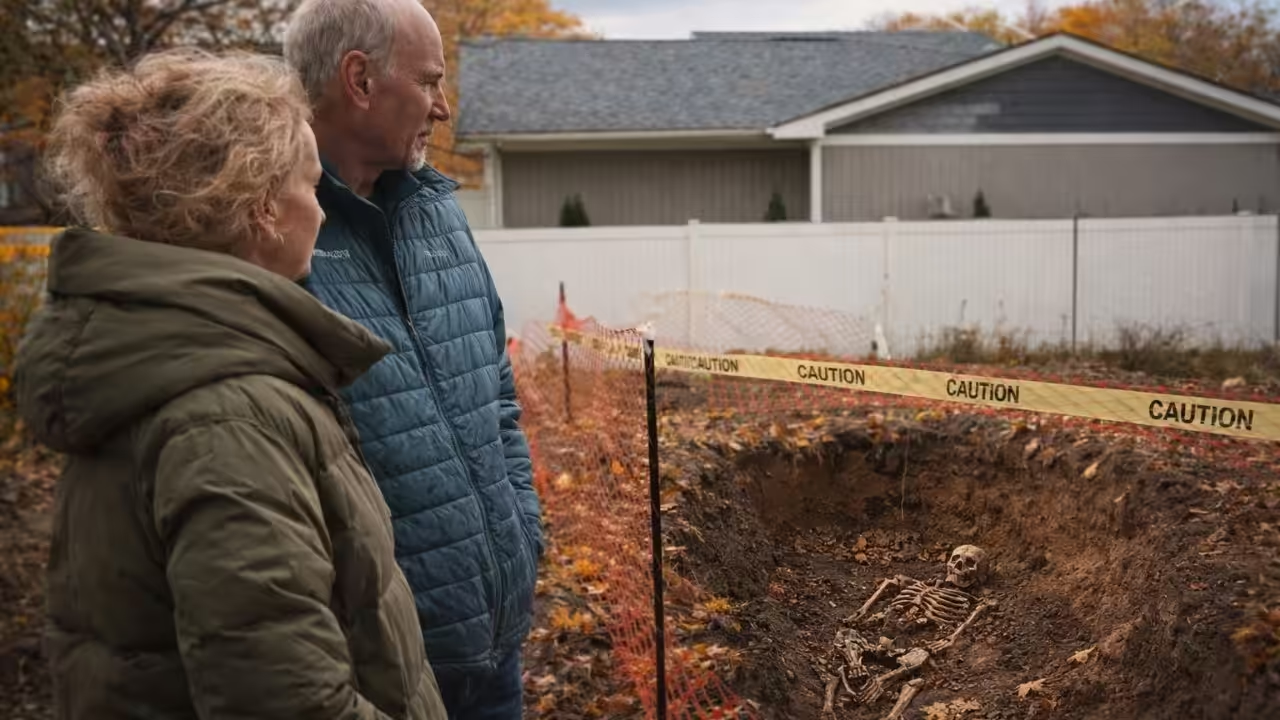
What began as a retirement plan for one Ontario couple turned into a costly and emotional legal ordeal after human remains were uncovered on their property during construction. The discovery was not linked to any recent crime. Instead, investigators determined that the remains were ancestral and belonged to an Indigenous man who had likely been buried there about 1,000 years ago.
Christine and Dan Reio had purchased a cottage property on Lake Erie in the Township of Wainfleet during the pandemic. For them, it was more than just a getaway. It was a place they hoped could eventually become part of their future retirement life. After getting local permission to demolish the old cottage and build a new structure, they moved ahead with the project expecting an ordinary renovation process.
Table of Contents
Renovation Work Took an Unexpected Turn
That expectation changed when their foreman contacted them with troubling news from the site. Human remains had been found during the work. From that moment, the home project stopped being a simple rebuild and became the center of a formal investigation involving police, provincial authorities, and an archaeological expert.
The examination reportedly concluded that the remains were those of an Indigenous man, likely in his 20s, buried centuries ago. The discovery immediately raised questions not only about the identity of the burial site, but also about whether there could be more remains in the surrounding area. That possibility is what triggered a larger and far more expensive legal process.
Why the Couple Could Face a Huge Bill
Under Ontario rules referenced in the report, the Registrar of Burials ordered a burial site investigation to determine the origin and nature of the site. The process requires the landowner to hire a professionally licensed archaeologist. The work is not limited to examining a single grave. It must also determine whether more bodies are present and whether the land may need to be treated as a cemetery under provincial law.
That requirement placed the financial responsibility on the property owners. According to the report, one archaeology firm estimated the investigation at about $234,000. The quote said a team of six people would need to work for nearly a month to properly assess the site. For a private couple building a home, the projected cost was overwhelming.
Christine reportedly described the amount as unreasonable, while Dan warned that the total could rise dramatically if additional remains were uncovered. What started as a single discovery could therefore expand into an even larger excavation and classification process, bringing the possible cost much higher.
A Law Designed for Protection, but at a Price
The case highlights a difficult legal and moral issue. On one side is the need to protect ancestral burial grounds and respect Indigenous history. On the other is the question of whether ordinary homeowners should bear the full burden when such discoveries are made on land that had already received building approval.
Ontario does have a provision, dating to 2002, that allows property owners to apply for financial assistance if they can show the investigation would create an undue financial burden. In this case, the couple said they applied for assistance in October 2024 but had not received a response by the time the People report was published.
That delay appears to have deepened their frustration. Beyond the possible financial loss, they said the matter had consumed an enormous amount of time and emotional energy. Christine said they had spent hundreds of hours dealing with the issue, describing sleepless nights and emotional strain as the uncertainty dragged on.
Indigenous Experts Say the Situation Is Bigger Than One Family
The story also drew attention from those working in archaeology and Indigenous heritage protection. Tanya Hill-Montour, archaeology supervisor with Six Nations of the Grand River, reportedly said the government had created an impossible situation for both property owners and Indigenous communities. She argued that the financial burden was so high that no one wanted to take responsibility for it, and that homeowners should not be left entirely on their own.
She also questioned whether the property should ever have been approved for development, given the area’s archaeological history. That raises a larger concern about planning systems and whether they do enough in advance to identify historically sensitive land before construction permits are granted.
What Local Officials Said
The Township of Wainfleet, according to the report, maintained that municipalities do not have access to precise archaeological or burial-site data and are not authorized to speculate on what may lie beneath a property. The township’s chief administrative officer said those determinations fall under provincial jurisdiction, not local government authority.
That response points to a gap in responsibility. The township approved the rebuilding request, yet the province controls the burial-site process, while the landowners may end up paying the bill. The result is a confusing system in which approval to build does not necessarily protect a homeowner from major legal and archaeological obligations that may appear later.
A Human Story Behind a Legal Dispute
At the heart of the case is not just a legal conflict, but a human one. The Reios were not developers managing a large commercial site. They were a couple planning a future home near the lake. Instead, they now find themselves caught between provincial rules, unanswered assistance requests, and the deep cultural responsibility that comes with uncovering ancestral remains.
Their case has become a powerful example of how land, history, and modern property law can collide. It also shows how easily a personal dream can turn into a financial crisis when hidden history is uncovered beneath a construction site.
Why This Story Matters
This case matters far beyond one family in Ontario. It raises questions about how governments should balance heritage protection with fairness to homeowners. It also highlights the importance of respecting Indigenous burial sites while ensuring that the cost of that respect is not pushed entirely onto private citizens who may have had no prior warning.
For now, the couple’s future remains uncertain. Their home project has been overshadowed by a process they did not expect, a bill they say they cannot reasonably absorb, and a system that seems to offer few quick answers. The discovery beneath their land has become more than an archaeological issue. It is now a test of how public institutions respond when private property and ancient history meet in the same place.